A Book a Day Keeps the Mental Breakdown
I have spent years reviewing embroidery designs, not just looking at the pixels on a screen but imagining how they translate into thread on fabric. When I first opened the files for A Book a Day Keeps the Mental Breakdown, my initial reaction was a mix of amusement and professional curiosity. It is a design that speaks directly to book lovers, bibliophiles, and anyone who finds comfort in a good story. But does it hold up when you move from a digital preview to a real-world embroidery project? As someone who has overseen countless custom apparel orders and boutique product lines, I am here to break down exactly how this piece performs in practice.
The First Impression: Mood and Layout
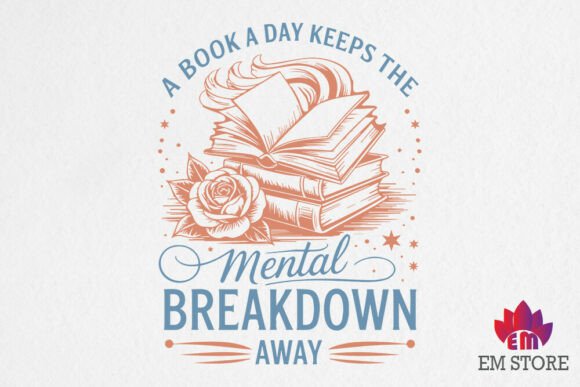
The visual personality of A Book a Day Keeps the Mental Breakdown is distinctively playful yet grounded. The typography suggests a casual, handwritten aesthetic that fits perfectly with modern craft trends. Unlike rigid corporate logos, this design feels like something a friend would write on a whiteboard in a cozy coffee shop. The layout balances the text with the implied imagery of a book, creating a focal point that draws the eye immediately.
For a designer, the first question is always about clarity. Does the text remain legible when stitched? In this case, the spacing looks generous enough to prevent crowding, which is crucial for machine embroidery. The phrase itself carries an emotional weight that resonates well with current market trends where mental health awareness and self-care are central themes. It creates a mood that is relatable, slightly humorous, and deeply personal. This makes it an ideal candidate for products that need to connect emotionally with the buyer, such as personalized gifts or small business merchandise.
Real-World Application: A Case Study
To truly evaluate this design, let us imagine a specific scenario. You are preparing a collection of tote bags for a local library fundraiser or perhaps creating a line of custom sweatshirts for a reading club. You decide to use A Book a Day Keeps the Mental Breakdown on a canvas tote bag. The design sits right in the center of the front panel.
As you hooping the fabric, you realize that the design's versatility is its strongest asset. Because it is a graphic element rather than a complex pictorial scene, it adapts well to the natural drape of the canvas. Once stitched, the texture of the thread adds a tactile dimension that flat prints simply cannot achieve. Customers running their fingers over the embroidery feel the quality of the work. The contrast between the thread color and the fabric background becomes the star of the show. If you choose a deep navy thread on a cream bag, the text pops with sophistication. If you go with bright neon thread on black, it leans into a more streetwear vibe.
This same design could easily transition to a baby onesie for a new parent who loves to read, or even a patch sewn onto a denim jacket. The fact that it is available in multiple formats means you can test it across different mediums before committing to mass production. Whether you are an Etsy seller looking to expand your catalog or a hobbyist making a gift for a bookworm friend, the potential applications are vast.
Performance Across Different Fabrics and Projects
When discussing A Book a Day Keeps the Mental Breakdown, we must consider how it behaves on various substrates. For custom apparel like t-shirts and sweatshirts, the design shines because these fabrics provide a stable base for stitching. However, caution is required when moving to textured fabrics. If you attempt to stitch this on a heavy boucle wool or a very loose weave linen without proper stabilizer, the tension might pull the threads, distorting the lettering.
Stretchy fabrics present another challenge. While the design is versatile, applying it to a stretchy knit cap requires careful handling. The hoop size must be large enough to accommodate the full width of the text without cutting off letters, yet small enough to maintain stability during the stitching process. For smaller items like aprons or kitchen towels, the design works beautifully, offering a charming accent that elevates a standard item into a thoughtful handmade product.
In the realm of commercial embroidery, consistency is key. If you plan to sell finished items featuring A Book a Day Keeps the Mental Breakdown, you need to ensure that every single unit looks identical. This design allows for high repeatability, provided you stick to the recommended stitch density. The fill stitches should be dense enough to cover the fabric completely, hiding any gaps, while the satin stitches should be tight enough to lay flat without fraying.
Where to Exercise Caution
Even the best designs have limitations. There are specific situations where A Book a Day Keeps the Mental Breakdown might struggle. Small hoop sizes are a primary concern. If you try to fit this entire phrase into a tiny 4x4 hoop, the letters may become too compressed, losing their character and becoming difficult to read. Always check your hoop size constraints before finalizing your project plan.
Dark fabrics require special attention regarding thread color selection. If you do not choose a high-contrast thread, the design will disappear into the background. Additionally, if the fabric is thin or sheer, the density of the stitches might cause puckering. In these cases, using a cut-away stabilizer is non-negotiable to support the fabric during and after stitching. Layered garments, such as hoodies with thick pockets, can also pose challenges if the needle cannot penetrate the thickness without breaking.
Another area to watch is curved surfaces. While caps are popular, the curvature can distort straight text if the design is not digitized specifically for that curve. If the design appears flat on the screen but looks warped on the hat, it is likely a digitization issue related to the surface geometry. Always test on scrap fabric first to confirm the visual appeal and structural integrity.
Design Notes for the Professional Maker
Before you start stitching, there are several practical steps to ensure success. First, review the file formats included in your download. You have access to EPS, SVG, PNG, and DXF files, which gives you flexibility for both vector-based workflows and direct embroidery machine import. However, remember that a digital file is only as good as the execution. Check the stitch density settings in your software to ensure they match the fabric type you are using.
Thread color contrast is paramount. Test your chosen colors against the actual fabric under the lighting conditions where the product will be sold or displayed. A design that looks vibrant in the studio might look dull in natural sunlight. Furthermore, inspect small details closely. Even minor errors in the digitization of a word like "Breakdown" can ruin the professionalism of the finished product. Use black and white mockups to verify that the design retains its shape and balance without relying on color.
If you are selling these items, confirm the licensing terms explicitly. Just because you own the digital file does not automatically grant you the right to resell the physical goods unless specified. Understanding the difference between a personal license and a commercial license is essential for protecting your craft business.
Final Thoughts on Visual Appeal and Value
A Book a Day Keeps the Mental Breakdown is more than just a clever phrase; it is a design asset that can elevate your brand identity. When executed correctly, it signals that you understand your customer's interests and appreciate the nuances of handmade quality. It builds trust through craftsmanship and engages buyers by offering a conversation starter.
Whether you are creating a holiday gift, a boutique product, or a digital printable mockup for your shop, this design offers a strong foundation. It strikes a balance between humor and heart, making it suitable for a wide range of demographics. By paying attention to the technical details—hoop size, stabilizer choice, and thread selection—you can transform this digital concept into a stunning finished product that stands out in a crowded marketplace.
Ultimately, the value of this embroidery design lies in its adaptability. It fits seamlessly into the world of crafts and graphics, serving as a bridge between digital creativity and tangible artistry. For designers, sellers, and makers alike, it represents a smart investment of time and resources, provided you approach it with the care and precision it deserves.